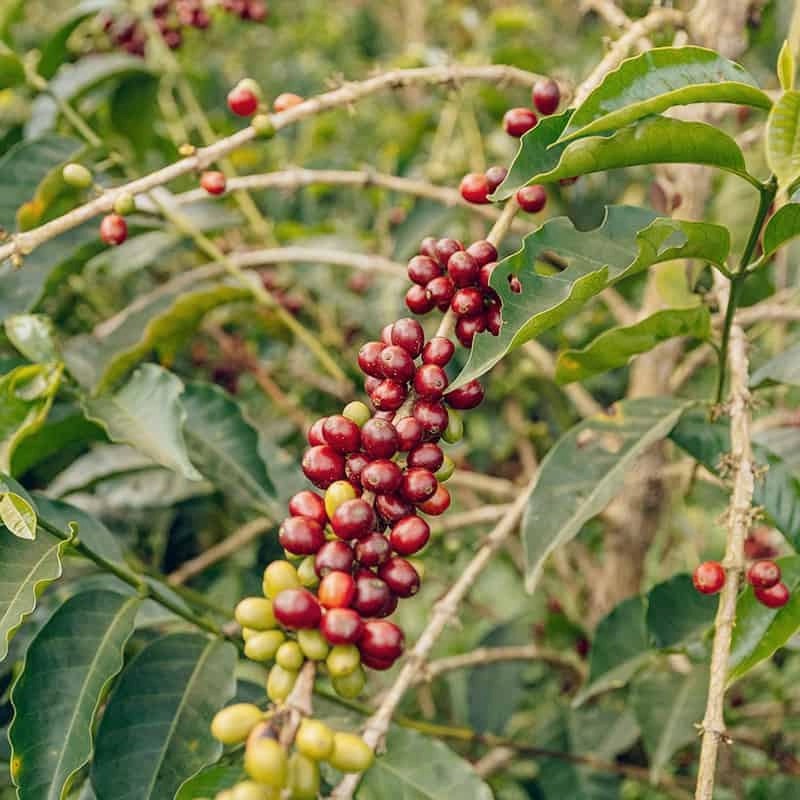
a wonderful sudanese landrace
A cup of coffee rarely surprises me. They may be slightly better or marginally worse than what I typically expect from a certain variety, but it is a rare occasion where they completely catch me off guard.
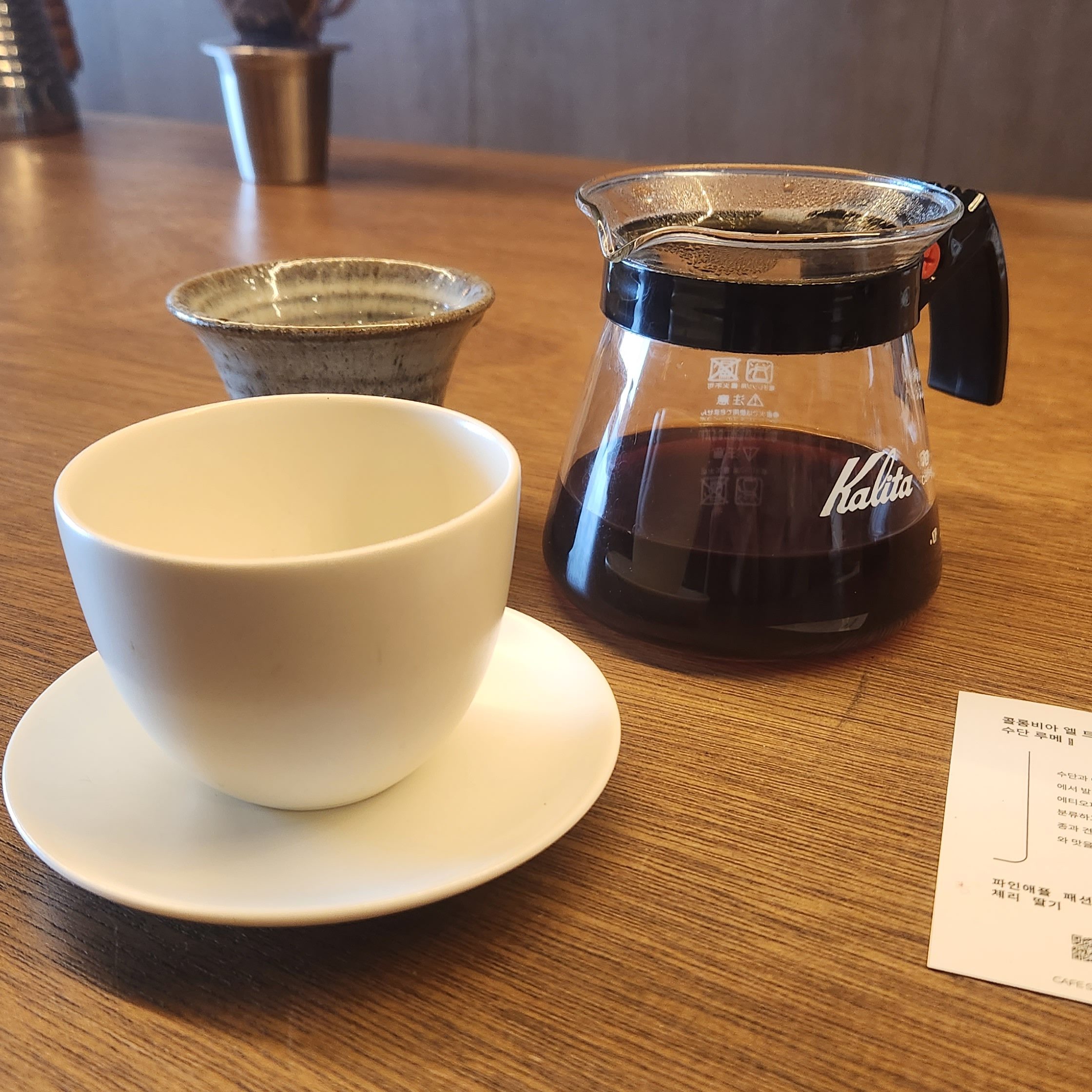
Last week, a fittingly rare variety of beans called “Sudan Rume” managed to accomplish such feat. The taste was something I never expected from a Sudanese landrace – notes of tropical fruit, dark cherry, caramel, and a touch of rum.
The moment I tasted this beautiful cup , my mind was immediately set; I was going to find out everything about this wonderful landrace from the valleys of South Sudan.
a Mysterious origin
The owner at the coffee shop who skillfully brewed my delicious cup of Sudan Rume told me an interesting story about the origin of the variety. While it is a widely agreed that the Sudan Rume originated from the Sudanese side of the Ethiopia-Sudan border, he claimed that it was somehow confirmed to be an Ethiopian variety. Unfortunately, I could not find any substantial evidence that would be of support for his rather fascinating hypothesis.
The evidence, in fact, suggests otherwise. The first written records of the Sudan Rume variety appear in several academic papers from the early 1940s, where it is reported that the variety was discovered on the deep forests of Boma Plateau, Rume Valley. (Thomas, 1942) While the Boma Plateau is located in the border region of Sudan and Ethiopia, where the distance to the nearest Ethiopian border can be as little as 65 kilometers (40 miles), it clearly lies on the Sudanese side of the border. Moreover, a recent research about the genetic compositions of Sudanese landrace indicate that the samples from South Sudan are clearly distinct from samples from Ethiopia in terms of their genetic makeup. (Krishnan et al, 2021) Unless powerful evidence emerges to turn the table around, it seems appropriate for us to assume the variety is indeed Sudanese.
Apart from the fact that it is of Sudanese origin, however, we know little of how we came to cultivate this fascinating landrace plant. First recorded in the Boma Plateau by A. S. Thomas in his trip to the region in December 1941, Sudan Rume is one of the two Sudanese landrace that are known and cultivated in a few specialty farms around the world. The other variety, called “Sudan Barbuk”, was discovered in the Barbuk area, 2-3 miles north of the Rume region. The interesting part is that no one knows how these landrace varieties “escaped” their natural habitat to end up in a specialty estate in Latin America. They are one of the most famous “escapees” along with the Gesha variety, which implies that these wild plants somehow escaped their origin in the horn of Africa without passing through the port of Mocha, Yemen. While there are records of Sudan Rume samples being introduced to farmers in Kenya and Sudan in the 1950s, we have no record on how they ended up across the Atlantic. They just popped out of nowhere, I swear!
- Thomas, A. S. (1942). “The wild arabica coffee of the Boma Plateau Anglo-Egyptian Sudan”, Empire J Exp Agric 10: 207-212.
- Krishnan et al., (2021). “Validating South Sudan as a Center of Origin for Coffea arabica: Implications for Conservation and Coffee Crop Improvement”, Front. Sustain. Food Syst.
biology and farming
When Thomas first reported on the Sudan Rume landrace, he noted that the coffee plants were relatively shorter with green-tipped leaves. He also noticed the lack of coffee leaf rust, a threatening disease caused by a fungus named Hemileia Vastatrix. In fact, the Sudan Rume variety is resistant to not only the coffee leaf rust but also the coffee berry disease, which often inflicts serious damage in African coffee estates. It is due to this resistance to major coffee diseases that the farmers and scholars identify the variety as a favorable option for breeding purposes. (Gimase et al., 2019; 2020)
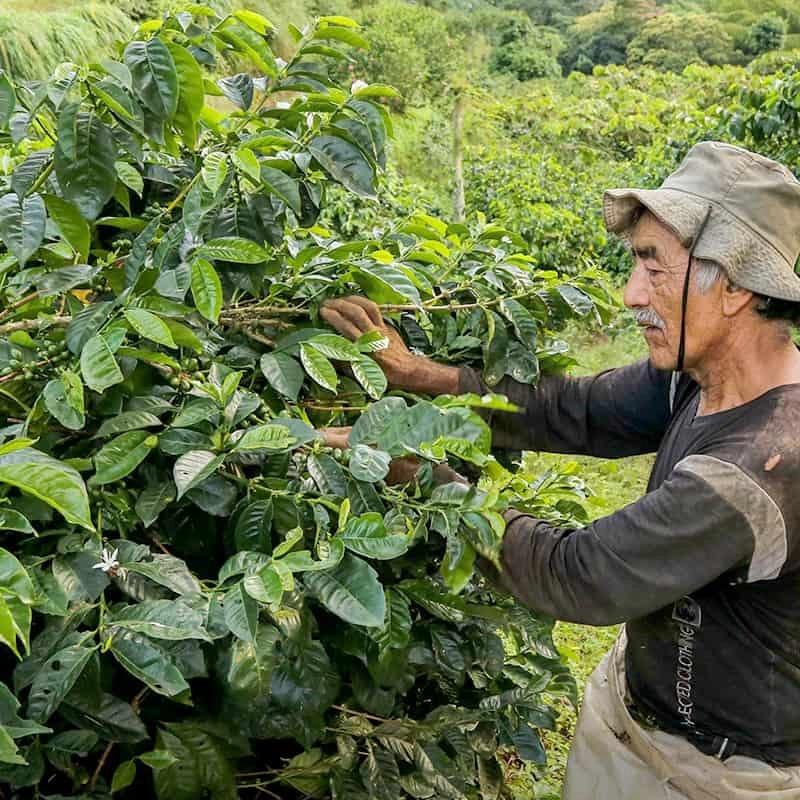
Another distinct characteristic of the Sudan Rume variety is its extremely low yield. It is known for a fact that the Sudan Rume plant produces substantially less coffee cherries than most Coffea. Arabica varieties tend to do, making it one of the most expensive and rare varieties to grow in a plantation.
Naturally, the Sudan Rume is one of the rarest variety of beans that you can find in the retail market. They are often out of stock, sold in tiny scales, or entirely out of your budget. So if you want some Sudanese beans for yourself, you might as well prepare to splash out.
- Gimase, J. M. et al., (2019). “Evaluation of coffee berry disease resistance (Colletotrichum kahawae) in F2 populations derived from Arabica coffee varieties Rume Sudan and SL 28”, Journal of Plant Breeding and Crop Science, 11(9), 225-233.
- Gimase, J.M. et al., (2020). “Genome-Wide Association Study identify the genetic loci conferring resistance to Coffee Berry Disease (Colletotrichum kahawae) in Coffea arabica var. Rume Sudan”, Euphytica, 216(86), 1-17.
Flavour profile
The Sudan Rume is also known for its strong varietal character. It is often described with notes like tropical fruit, yogurt, ripe plum, savoury, and spicy – surely an intriguing combination of unexpected flavours. Taking the first sip of Sudan Rume is like opening a birthday present from your long-estranged relative; you never know what you will end up with.
My own experience with the variety tells a similar story. I initially expected my cup to have a delicate floral quality with a strong citrus note as most Ethiopian coffees do, simply because of how close South Sudan was to Ethiopia. Imagine my surprise when my first sip of the cup revealed a host of intense, vibrant tropical flavours! It almost tasted like a tropical concoction of fruits and spices. To be more precise, I noticed that notes of papaya, cherry, brown sugar, cinnamon and ginger were prominent. My partner even described the flavour combination as similar to that of a Tootsie Pop.
Of course, the flavours may vary from batch to batch, brew to brew. But one thing I can say for certain about the Sudan Rume is that it is far from the soft and delicate characters of Ethiopian coffee. It is bold and experimental, but can work surprisingly well when brewed with care – just like that one hot-pink statement piece in your wardrobe.
The Sudan Rume coffee I had was natural processed, but I have an completely ungrounded gut feeling that it would pair exceedingly well with some of the trendy fermentation processes. My bet is on the lactic acid fermentation, for I believe the yogurt-like acidity of the process would really compliment the tropical flavour of the Sudanese heirloom.
 Coffee nerd blog
Leave a comment